
Translate that!
I’m currently on a bit of a ‘translation’ high. See if you can identify these directly-translated animal names.

An ordinary life with a dusting of luxury.

I’ve expressed in previous posts my love for the Afrikaans language. It is so colourful and descriptive and sometimes I find it difficult to find the equivalent words in English.
Today my focus is on food names in Afrikaans. Some of the terms are very archaic, however there are some terms that Afrikaans purists will still use and you may still come across the pure Afrikaans words on some restaurant menus. Most of the terms are just quirky (and peculiar to say the least) and fun to see the direct translation! For each direct translation I will give a little description for you before giving you the Afrikaans word with a little guide on how to pronounce the Afrikaans term before giving you the proper English word. Try to decipher from the description what I’m talking about before I give you the English term.
Oh, and if you see some random pictures, I am just scattering these to make things look pretty! For the first time ever I have used AI to generate the feature image. Please let me know your thoughts.
I’ll put some links to my previous translation posts at the bottom.
This is a delicious deep fried piece of dough. Once the dough has been cooked through it will puff up and resemble a doughnut-esque breadroll. We eat this predominantly with a curried mince, but it is equally delicious with a chicken-mayo filling, or a jam and cheese filling, or even just cheese and golden syrup. The Afrikaans word: vetkoek (fett-cook). You can find my recipe for it here: Traditional South African Vetkoek.
Click here to hear pronunciation.
This sounds utterly disgusting! The thing is that it is actually pretty amazing, tasty and utterly delicious. The oliebol (oo-lih-ball) is none other than a doughnut! In fairness the word doughnut is also pretty funny: dough that’s gone nuts! Click here to hear pronunciation.
It sounds earthy, sweet, crisp… Please don’t eat an aardappel (ahrd – ah – puhl) raw as this would be mealy, dry and very starchy. I am of course talking about a potato. If you’d like a wonderful potato salad recipe, see the link here. Click here to hear pronunciation.
I’m sure you’ll be able to guess this one quite quickly, but a suurlemoen (see-r-luh-moon) is none other than a lemon. Click here to hear pronunciation.
This has actually never occured to me until today! This little green fruit hails from the citrus family and comes in a few varieties such as key, finger, Persian and blood… It is of course the lemmetjie (leh-me-key) which is a lime. Click here to hear pronunciation.


This is one of my most favourite ways to cook an egg. A kalfsoogeier (cahlf’s-oogg-ey-e-r). I love the ggggg in this word as it just rolls off the tongue! A kalfsoogeier is a slightly archaic term for a poached egg. Nowadays it is more commonly referred to a geposjeerde eier which is such a boring way to say poached egg… Click here to hear pronunciation.
You read that correctly… Rumour has it that King Charles eats one of these a day: hidden inside his salad so he can swirl it up and create a creamy dressing. An invalide eier (uhn-vah-lee-duh aye-uhr) is a cottled egg. Click here to hear pronunciation.


This one really made me chuckle. Especially since this fruit (hint hint) goes so well with parma ham which (to the layman) is a good substitute for bacon… Spanspek (spun-spack) is of course a melon. Click here to hear pronunciation.
Us South Africans don’t beat around the bush. We say it as we see it! A witwortel is a staple on the British Sunday roast. I love roasting them in honey are thyme with a squeeze of small blade! Witwortel (vit-vor-tuhl) is a parsnip to you and me! Click here to hear pronunciation.
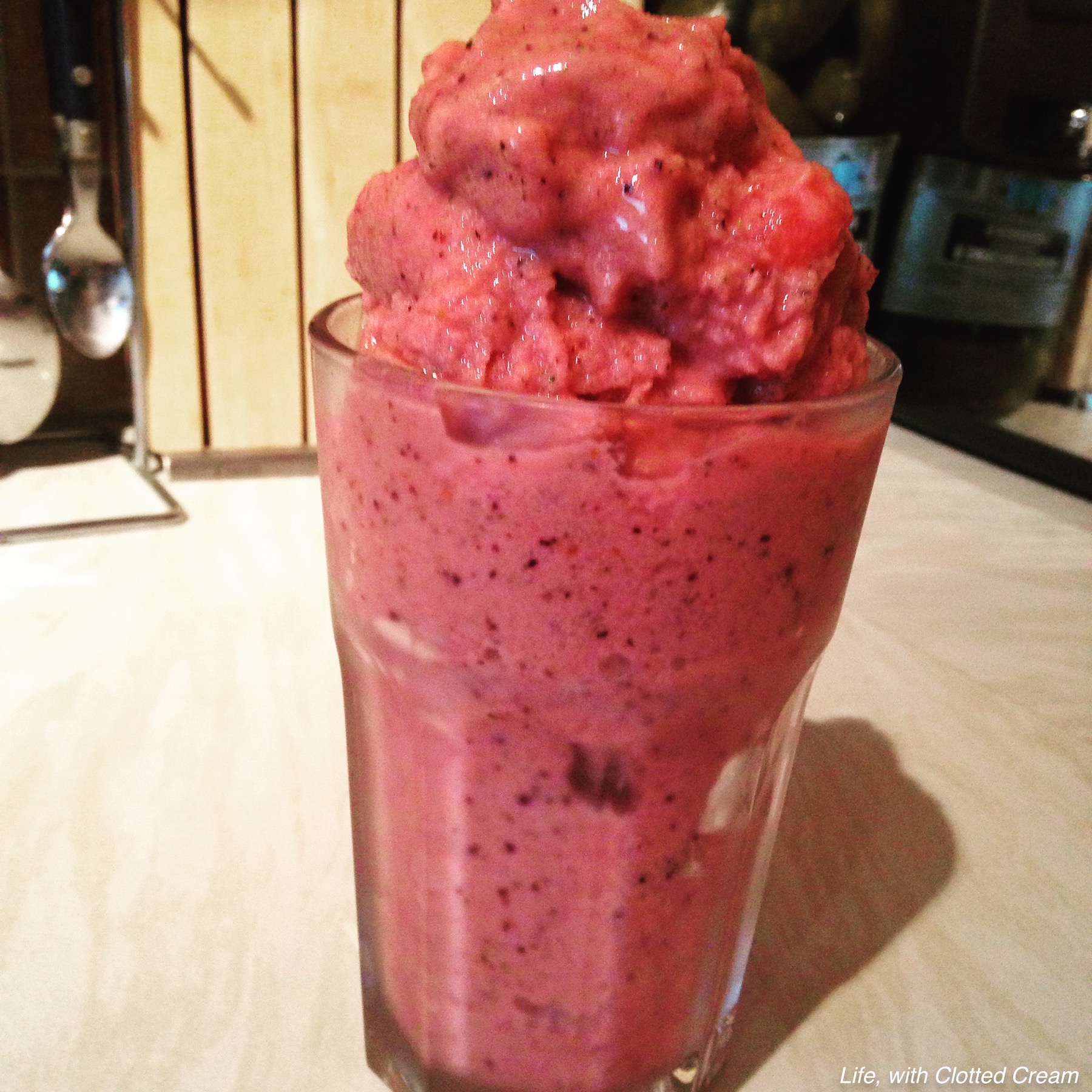


This is the backbone of any South African al fresco dinner. Any good South African knows how to make a fire and how to braai some meat on the coals as no Saturday (or some Wednesdays!) are complete without putting a cross disc on the fire… A kruisskyf (kr-aye-s sk-aye-f) is a rump steak! This is a bit of an archaic term and very few people still uses the word kruisskyf, but you will find that it is still very common in Afrikaans recipe books and some Afrikaans magazines’ recipe sections. Click here to hear pronunciation.
Fun fact: a skyf in Afrikaans has multiple meanings depending on the context you are using. It can refer to either a disc (such as a licence disc on your car window), a slide (such as a slide show), crisp (as in the potato chip), slice (slice of cake), target (such as the target you’ll find at an archery range) and even cigarette (this, however, is slang). I am sure I have missed some meanings as you can combine the word skyf with other words to completely change the meaning.
This is hands down the most tender piece of meat you will ever come across and not at all anything to do with either rabbits or hares. Beeshaas (b-ea-s (as in fear) h-aahh-s) is a fillet steak. Click here to hear pronunciation.


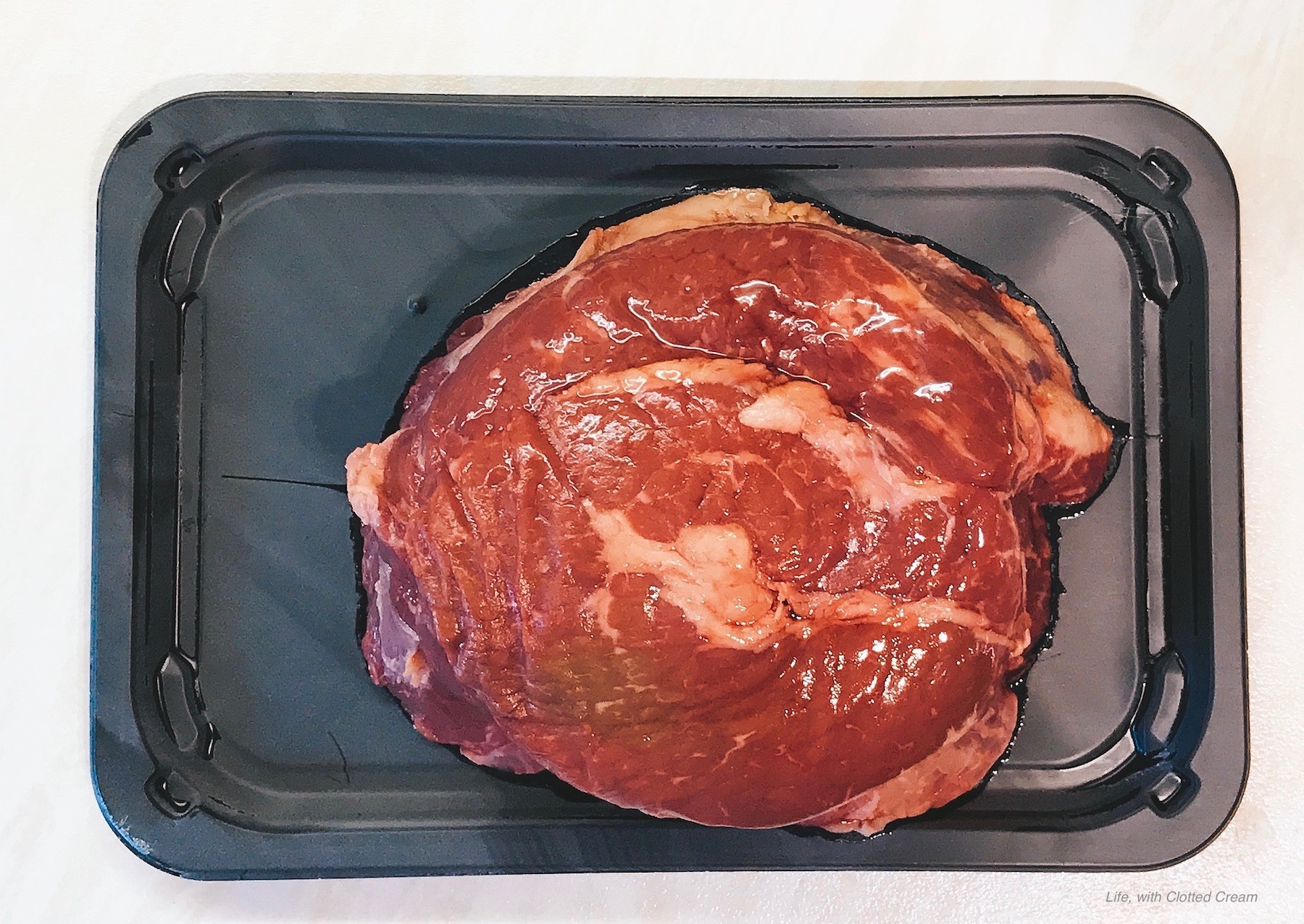


Every kids’ birthday party has tonnes of dotted wines. They have absolutely nothing to do with alcohol and the dots are optional I suppose; decoration depending! A kolwyntjie (kohl-vein-key) is a cupcake. Click here to hear pronunciation.
Does this sound appetising at all? I’m not sure! This dessert is very popular around Christmas and I love making a chocolate and cherry version of this. Koekstruif (cook-str-aye-f) is a trifle to you and me. Most South Africans would indeed refer to this dessert as a trifle, but as a little added bonus the struif part of the word refers to the liquid inside of an egg and the closest translation that I could find was omelette.
Click here to hear pronunciation.


Which direct translations did you find the most peculiar or quirky? Were there any you could guess right from the off-set? Let me know in the comments!
As a side-note: as I’m adding in the pronunciations from our trusty friend Google, I’m laughing even more to see their translations for some of these words!
I’m currently on a bit of a ‘translation’ high. See if you can identify these directly-translated animal names.
I could not stop laughing this week at this new song. I just had to try to translate it so that my non-English speaking friends can laugh with me…
Have you ever found direct translations of other languages interesting or even entertaining? These are a few of my favourite Dutch-to-Afrikaans-to-English translations.


 Life, with Clotted Cream
I love that you do this. It is so interesting and giggle worthy. Thank you, from Wyoming, USA.
LikeLike
Thank you so much! I love writing these types of posts.
LikeLike